Less is more (dodging a bottomless money pit)
I once had five minutes to decide what my life was worth. It all fit in one hand.
Water from two rivers had broken through the dams upstream and was pouring into our neighborhood. There was no time to pack. I grabbed my important papers and my phone, and I was out the door. Everything else stayed behind: the furniture, the clothes, the things I’d spent years collecting.
Here’s what surprised me. Once I was safe, I didn’t miss most of it. Not the couch. Not the closet full of shoes. What mattered had made it out with me, and the rest turned out to be weight.
That day rewired how I think about money, space and stuff. Less really is more, and not in a fortune-cookie way. In a practical, keep-your-cash, keep-your-sanity way.
Why more stuff doesn’t mean you’re doing better
A lot of us were raised to measure progress by what we own. Bigger house, more rooms, more things to fill them. But every item you bring home comes with a hidden bill. You pay to buy it, pay to store it, pay to clean it, insure it, repair it and eventually move it. Some people end up renting a storage unit for things they haven’t touched in years. That’s paying rent for stuff that doesn’t pay you anything back.
That’s the bottomless money pit. It doesn’t swallow you all at once. It nibbles, every month, until you wonder where your money went.
Everything you own, you also have to look after. Choose what deserves your attention.
Lesson one: carry less baggage
When disaster hits, the person with less has less to lose and gets moving faster. That’s the emergency version. The everyday version is just as real.
Clutter is noise. A crowded room makes it harder to think, harder to rest and harder to find what you need. When I cleared out my space, my head cleared up too. I work better, I sleep better and I spend less time hunting for my keys.
This applies to business, too. A lean operation, with fewer subscriptions, fewer gadgets and fewer “nice to haves,” is easier to steer when the market shifts. Overhead is just baggage with an invoice attached.
Lesson two: practice more gratitude
Standing there watching my town go under water is something I’ll never forget. Not everyone gets to walk away from something like that. I did, and I don’t take it lightly.
Since then I notice the small stuff more. A hot meal. A quiet morning. A dry floor. When you appreciate what you already have, you stop chasing the next purchase to feel good. Gratitude is the cheapest wealth strategy I know.
How to start without throwing everything away
Minimalism doesn’t mean living in an empty white box. It means everything you keep has a reason to be there. Here’s how I’d start:
- Build a grab-and-go folder. Birth certificates, IDs, insurance papers, deeds, a list of key phone numbers. Keep it in one waterproof spot and scan copies to the cloud. If you take nothing else from this article, do this.
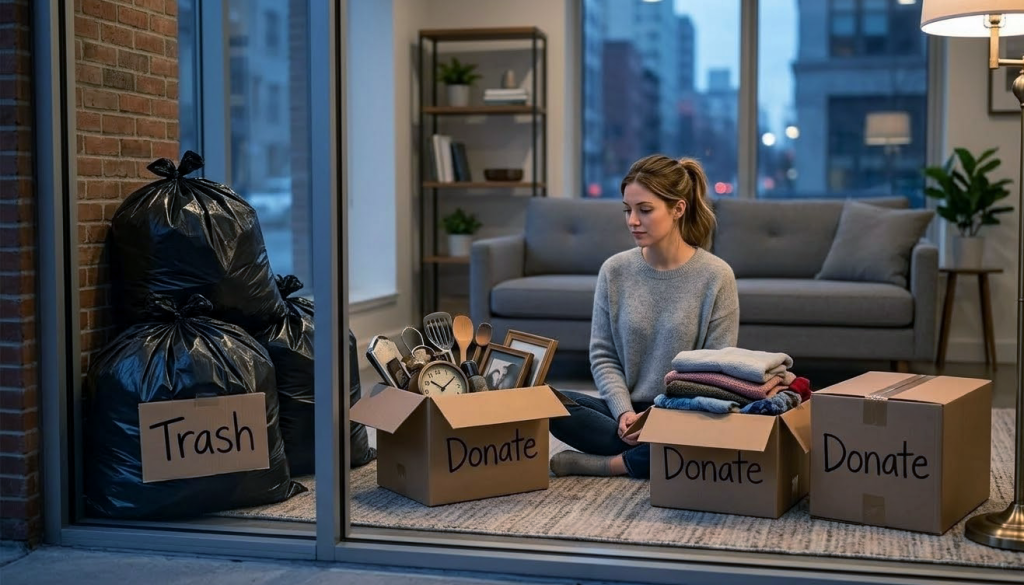
- Run the five-minute test. Walk through your home and ask, “Would I grab this if I had to leave right now?” If the answer is no for years straight, it may be time to sell, donate or toss it.
- One in, one out. New pair of sneakers? An old pair leaves. This one rule stops clutter from creeping back.
- Wait 30 days on wants. Put non-essential purchases on a list. If you still want it a month later, buy it with a clear head. Most of the list disappears on its own.
- Audit your subscriptions. Streaming, apps, memberships. Cancel anything you haven’t used in the last month. That’s often easy money back in your pocket.
Does it actually save money?
Yes, and usually more than people expect. You buy less, you need less space, you maintain less and you’re less tempted by impulse spending. Selling what you don’t use can even put cash back in your hand right away. The bigger payoff, though, is freedom. When you’re not tied down by stuff, you can move, adapt and take opportunities faster.
The bottom line
I learned this the hard way so you don’t have to. The things that truly matter will fit in your hands, and the people who matter will be standing next to you. Everything else is optional.
Before your possessions start owning you, try owning less. It might be the best financial move you make this year.